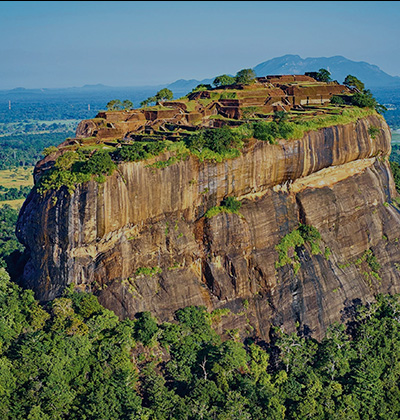
Sigiriya is one of Sri Lanka’s most important historical sites. Locals refer to this historic palace and castle complex as the “Eighth Wonder of the World,” and it attracts hundreds of tourists each year. It is undoubtedly Sri Lanka’s most popular tourist attraction.
The palace is situated on a large rocky plateau 370 meters above sea level in the centre of the island, between the villages of Dambulla and Habarane.
The Sigiriya rock plateau rises 200 meters above the surrounding forests, produced by lava from an extinct volcano. The tourists are astonished by the extraordinary synergy that exists between nature and human creativity.
The palace was given the name Sigiriya after this lion. Sigiriya is derived from the word Sihagri, which means Lion Rock.
The paintings made during Kasyapa’s reign covered practically the whole western wall of Sigiriya. To this day, eighteen frescoes have remained.
The paintings portray naked women and are thought to be either portraits of Kasyapa’s wives and concubines or religious rites performed by priestesses. Despite the fact that the girls represented in the frescoes are unknown, these antique artworks celebrate feminine beauty and are historically significant.